Nugget #70 ~ Use the Organisational Pyramid upside down - Why Real Leaders Serve & Support
Nov 05, 2025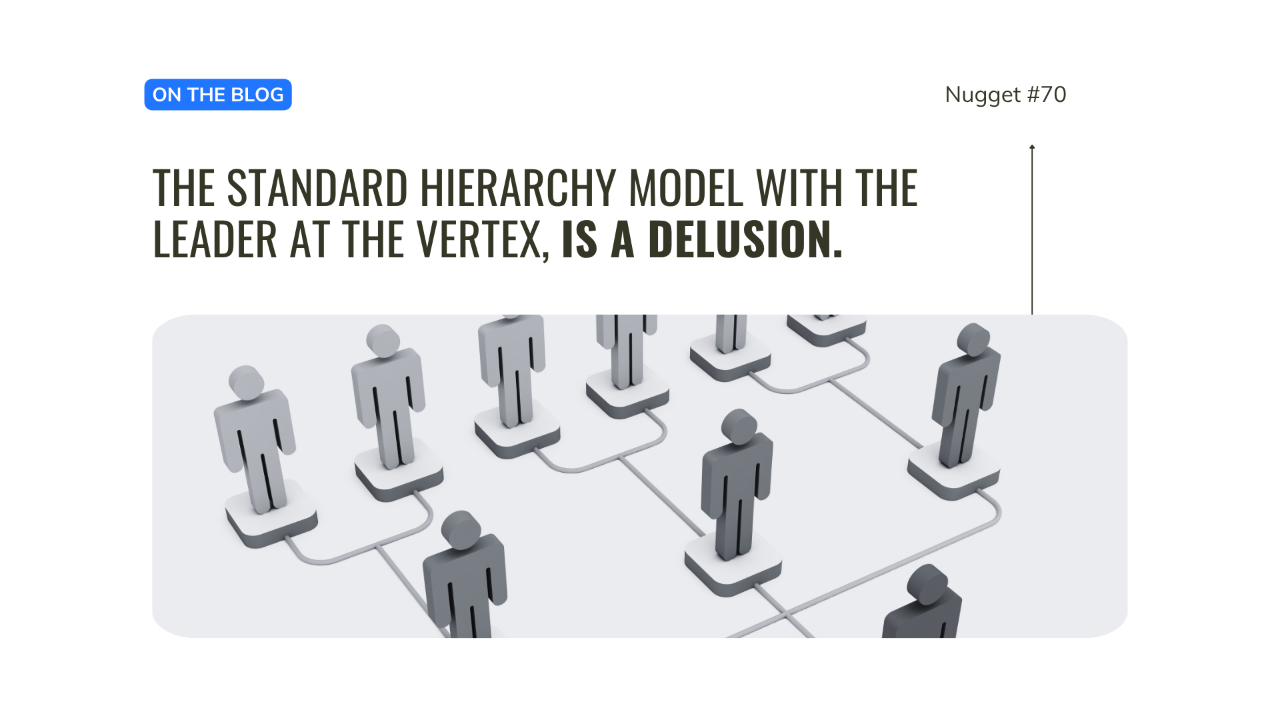
The standard hierarchy model with the leader at the vertex, is a delusion. In the real world - particularly in the sweaty, high-stakes, coffee-fuelled world of modern enterprise - the best leaders aren’t perched on top of the pyramid. They’re beneath it, holding the whole thing up; giving support to the teams, providing resources required.
And if that sounds upside down, that’s because it is. Welcome to real leadership.
In a truly thriving organisation, leadership flips the classic org chart. The boss doesn’t bark orders from a marble desk. They clear obstacles. They’re the unglamorous grease in the gears, the person who steps in when the printer explodes or the client explodes or both.
Their authority flows upward, earned not by rank but by how they support, enable, and protect those doing the actual building, fixing, negotiating, designing, and selling.
The leader’s job? Make the team better. Not richer, not cater for their own ego. Just better at what they do. They should walk into the room and everyone breathes easier, not stiffer.
True leaders are available, even when it’s inconvenient. They don’t hide behind filters or assistants or “strategic priorities.” Because they understand that the moment you become inaccessible, you stop leading and start impersonating.
Trust is built in the moments people see you doing the right thing - especially when you don’t have to. Like staying late to help fix an unexpected machine breakdown. Or eating last at a team lunch (yes, even / especially if you’re the one who’s paying).
These aren’t tokens. They’re culture-building blocks. People don’t remember what you say in annual strategy meetings. They remember whether you carried cables at the launch event.
Real leadership isn’t performed. It’s observed.
From a systems lens, leaders serve as catalysts. They don’t drive every process, but they set the tone for all systemic reactions. If leadership is reactive, defensive, and vague, the system becomes sluggish, suspicious, and brittle. People will notice!
But if leadership is proactive, engaged, and adaptive, the system becomes elastic, responsive, and intelligent. Culture doesn’t trickle down - it spirals outward from the actions of those in leadership positions.
Smart Questions to think about:
Prompt 1: Who benefits most from your leadership style - you, or the people around you?
Prompt 2: What would your organisation look like if the people at the top truly saw themselves as servants to those at the frontlines?