Nugget #69 ~ Trust Isn’t Built by Policy - It’s Forged in the Fire of the Challenge
Oct 30, 2025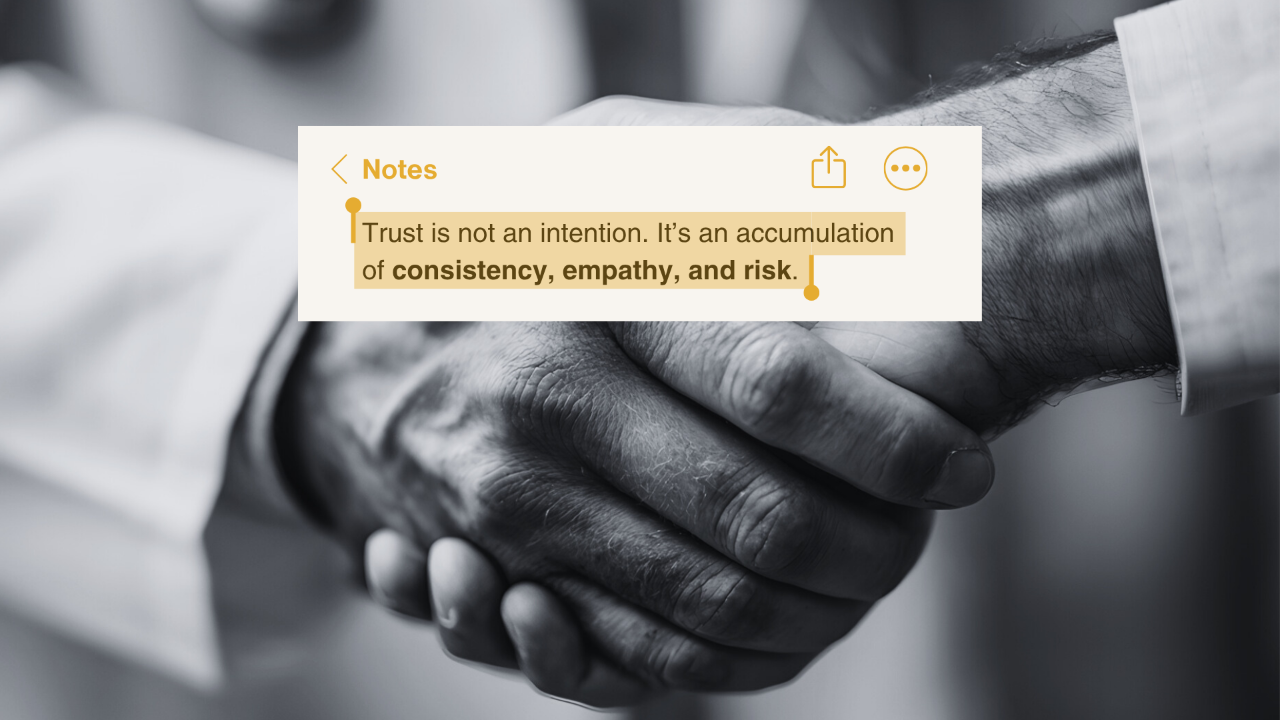
Trust is a curious thing. It’s not printable on a glossy brochure. It doesn’t show up in mission statements, HR handbooks, or staged team-building photos featuring suspiciously happy employees zip lining through the woods.
No, trust is earned in the trenches. Not the metaphorical ones - the real ones: late-night deadlines, cascading failures, honest blunders, and the occasional leadership wobble. That’s when the real culture shows up. And that’s when trust is either born… or betrayed.
Let’s be blunt: You don’t build trust by announcing “We’re a high-trust culture.” That’s like calling yourself humble.
Trust is not an intention. It’s an accumulation of consistency, empathy, and risk. People trust when they’ve seen what happens when things go sideways - and how their leaders respond.
Do they point fingers? Hide behind legalese? Or do they wade into the mess, admit fallibility, and help fix what broke? The answer is remembered - forever.
If you want to fast-track trust, try navigating a crisis together. True story: on a serious high stakes defense project, a particular specialist team botched a crucial mile-stone. There was expensive physical damage, the budget was torched, the military client fuming, and the team close to mutiny.
But something remarkable happened. As project leader I did not seek scapegoats, but the best and quickest way the TEAM could turn the story around. We pulled together specialist engineers, suppliers and logistics including users in uniform, in a war-room. We ordered food and ample coffee, cancelled weekends, and built the recovery plan step by step.
Every one came out exhausted - but a tight team. The next 2 years, that team performed at levels that baffled everybody. Why? Because they’d worked every lose together, had a common goal, solved the problem, and appreciated and got to know each other.
Every tiny, consistent action either builds the trust bank - or bankrupts it.
From a systems perspective, trust acts as a lubricant and a shock absorber. It reduces the friction in communication and decision-making, and it allows the system to absorb shocks without cascading into dysfunction.
Low-trust systems? They add bureaucracy, redundancy, and suspicion. They slow down, seize up, and eventually collapse under their own caution.
Smart Questions to think about:
Prompt 1: What structures, behaviours, and rituals in your organisation actively demonstrate trustworthiness?
Prompt 2: If a crisis hit tomorrow, would your team draw closer - or retreat into silos?